Understand what variables describe the state of the press.
How to formulate realistic expectations?
Most press designs are a duplication of almost identical printing units. Each unit should be similar to the others (except for specialized units dedicated to particular tasks such as varnishing, hot-stamping, or similar). This means we should expect, especially in the case of new machines — that these units will be characterized by similar parameters. The ideal scenario is that very similar units have no significant differences.
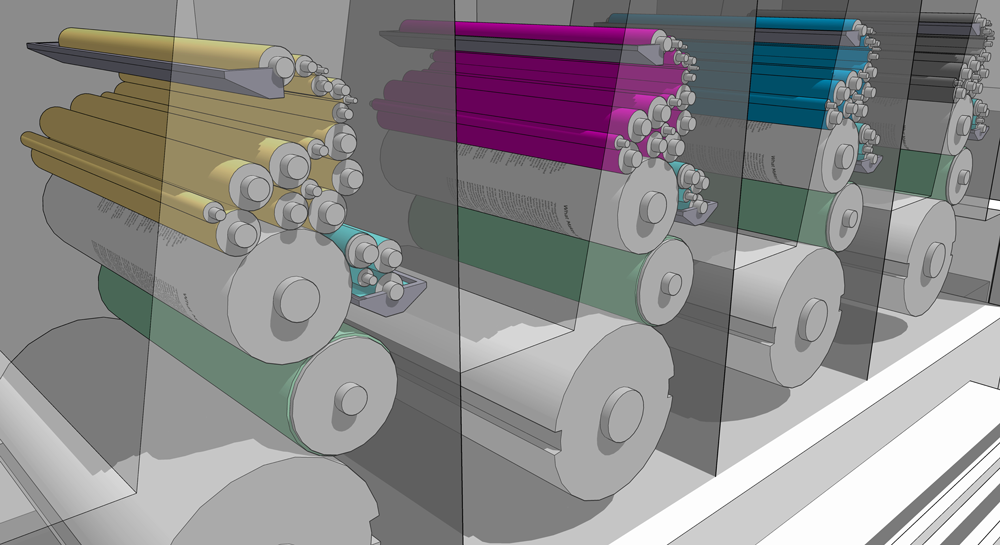
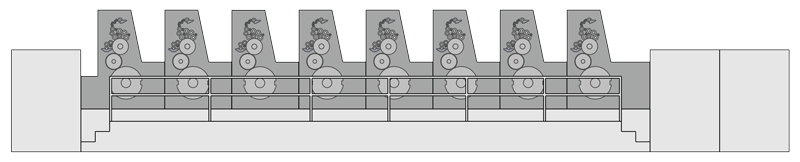
If we are dealing with a multi-color press with more than four units, we can imagine many patterns of printing sequences on such a press. Suppose we are dealing with a machine with eight units. When printing on such a machine, we can, for example, use CMYK process printing enriched with an additional 4 spot colors. While the standard currently defines the printing sequence in the order K, C, M, Y, it is unknown how these four process colors will be combined with the spots. Printing additional spot or extended colors may require the K, C, M, Y, to shift to different units, which have far-reaching consequences related to print variation and accuracy due to plate curves built to accommodate the press conditions:
Since each press unit typically renders color differently (different pressures, ink stripes, water distribution, etc.) — for example, it will result in different dot gains, which becomes nearly impossible to manage the different sequences of inks. If we can ensure that each unit renders color identically, then managing different ink sequences becomes a non-issue.
| K C M Y G O R V | G O R V K C M Y | R V K C M Y G O |
 |
|
|
The three sample sequences shown above demonstrate that black ink can be printed on the first, third, or fifth unit — of course, the number of variants is much higher. Ensuring that each press unit images color consistently ensures maximum production flexibility with reduced costs.
Understanding the Press
Essential features - Mechanical measurements.
The design of many newer presses is such that the impression cylinder is twice the size of the printing cylinder. A consequence of this is that the printing takes place with alternating two separate cylinder halves. We should expect that a correctly configured press will print similarly with each half of the cylinder. But it is quite easy to have differing pressures between units due to setup issues (presses are often over pressed), mechanical damage, or incorrect centering (rolling of the cylinder), which will change how the units image color. It is critical to consistently analyze the press by checking not just one sheet but the subsequent sheet also. It is critical to have the ability to measure cylinder to plate pressures for all units and to ensure:
- pressures are not too much (least amount to provide good image transfer, too many causes higher friction, wear, and electrical costs);
- that the pressure values will be similar between all units.
Attention:
Detection of possible problems with two halves of the cylinder working differently can quickly be accomplished by analyzing the variation of the print — comparing two sheets in a row.
It is enough to perform analyze three comparisons — once for the first sheet to itself, once for the second to itself, and next comparing both sheets to one another. If the variation values are similar — there is no problem— but if the comparison between two sheets is higher than each sheet to itself, it is worth locating the cause. Using the Nip Pressure sensor will help pinpoint the cause very quickly. Referenced on next page.
Color reproduction depends to a large extent on the mechanical condition of the cylinders and rollers that make up each successive pass-through on the press. The mechanical parts of the press are supplemented with consumables such as blankets, packing, etc. When verifying the press, using low-quality blankets can produce a bad result on a good machine. Therefore, it is important to use quality consumables in order to assess the condition of the press accurately.
Preliminary measurements
If selling the press, it is critical to minimize potential causes of variation. These tools help minimize variables that will reveal themselves with this press benchmarking process. If the print variations indicate significant differences, it will be important to make these types of measurements:
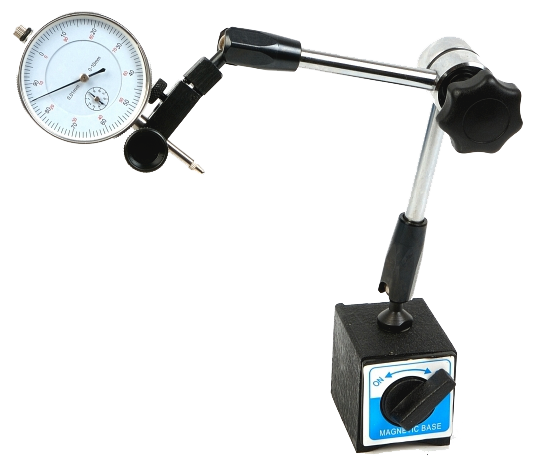
- Measure centering by mechanical measurement with dial gauge
- Regularly digitally measure and record, nips pressures between plate and blanket and blanket and impression cylinder using the NiP Control's Pressure Indicator. By recording these values into the ChromaChecker system, it is easy to perform an assessment of the within sheet uniformity, and the between unit uniformity, both extremely useful metrics to pinpoint problems.
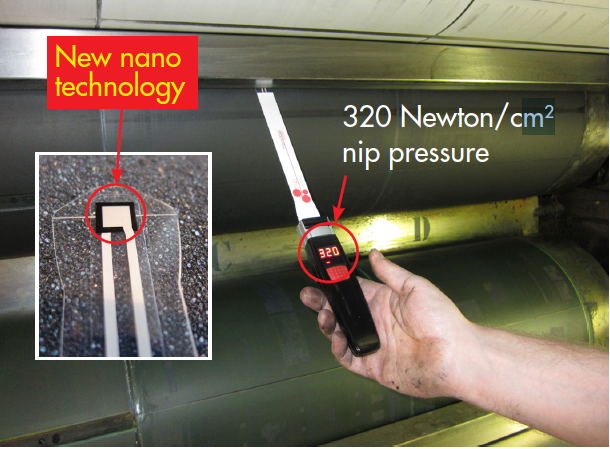

It is recommended to document the measurements of the CC NIP Inspector - Digitally measure and record ink stripe, and adjust ink strip “on the fly” if not set correctly using the Nip controls Nip Width Indicator, this ensures that the ink lay down across the width of the press is uniform and that the ink lay down between the units is uniform and consistent, both critical to ensuring each unit images color consistently.
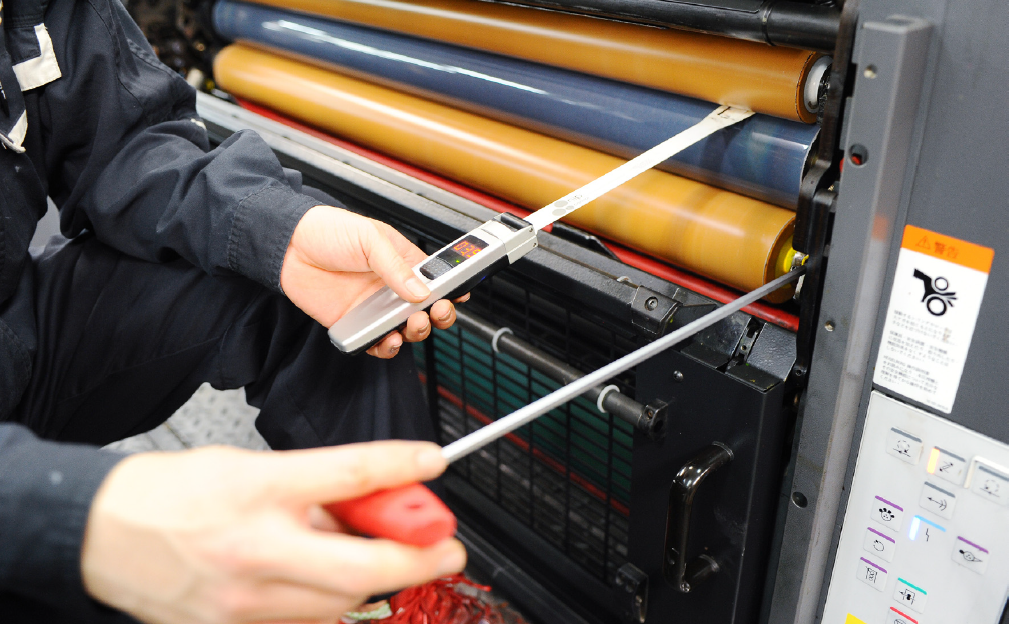

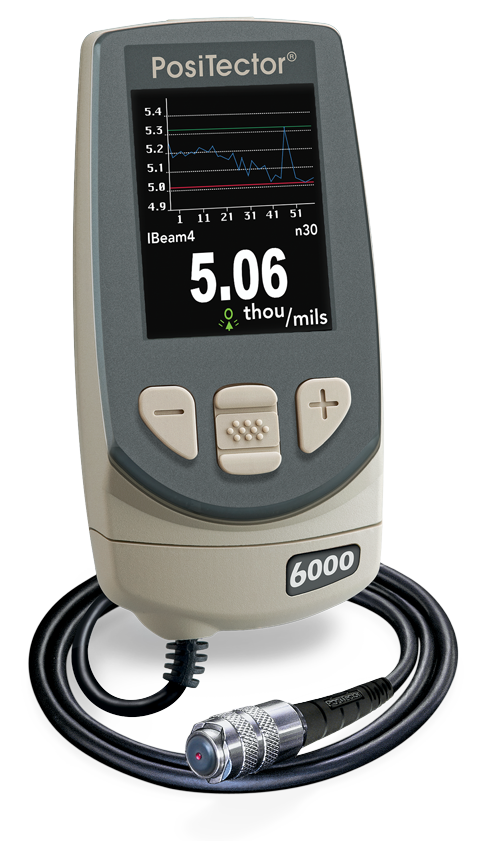
It is recommended to document the measurements of the CC NIP Inspector - Measure the thickness of the blankets, packings, and offset plates. The use of a dedicated device helps to take measurements directly on the cylinders
- Check rubber hardness with a durometer.
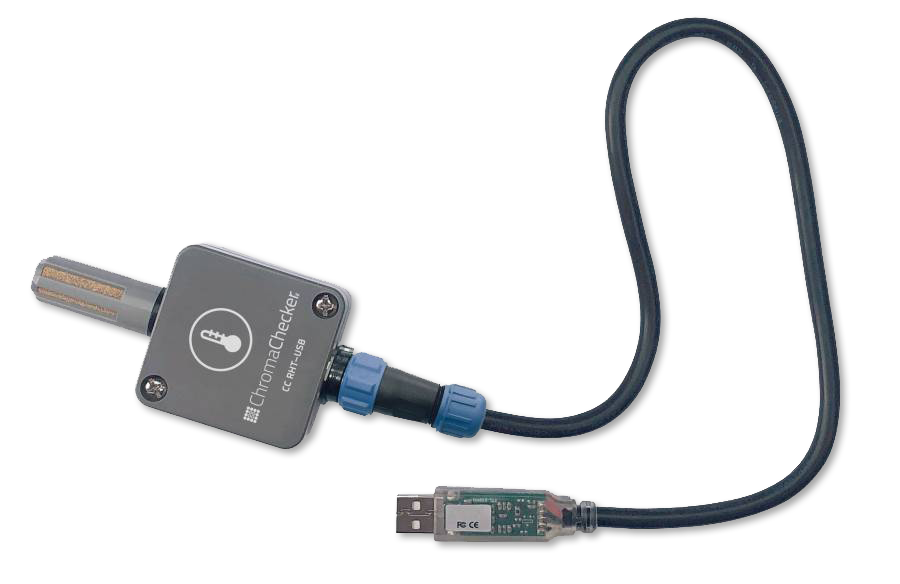
- Control RHT parameters - learn more about Environmental Inspector, Dataloggers, and Sensors.
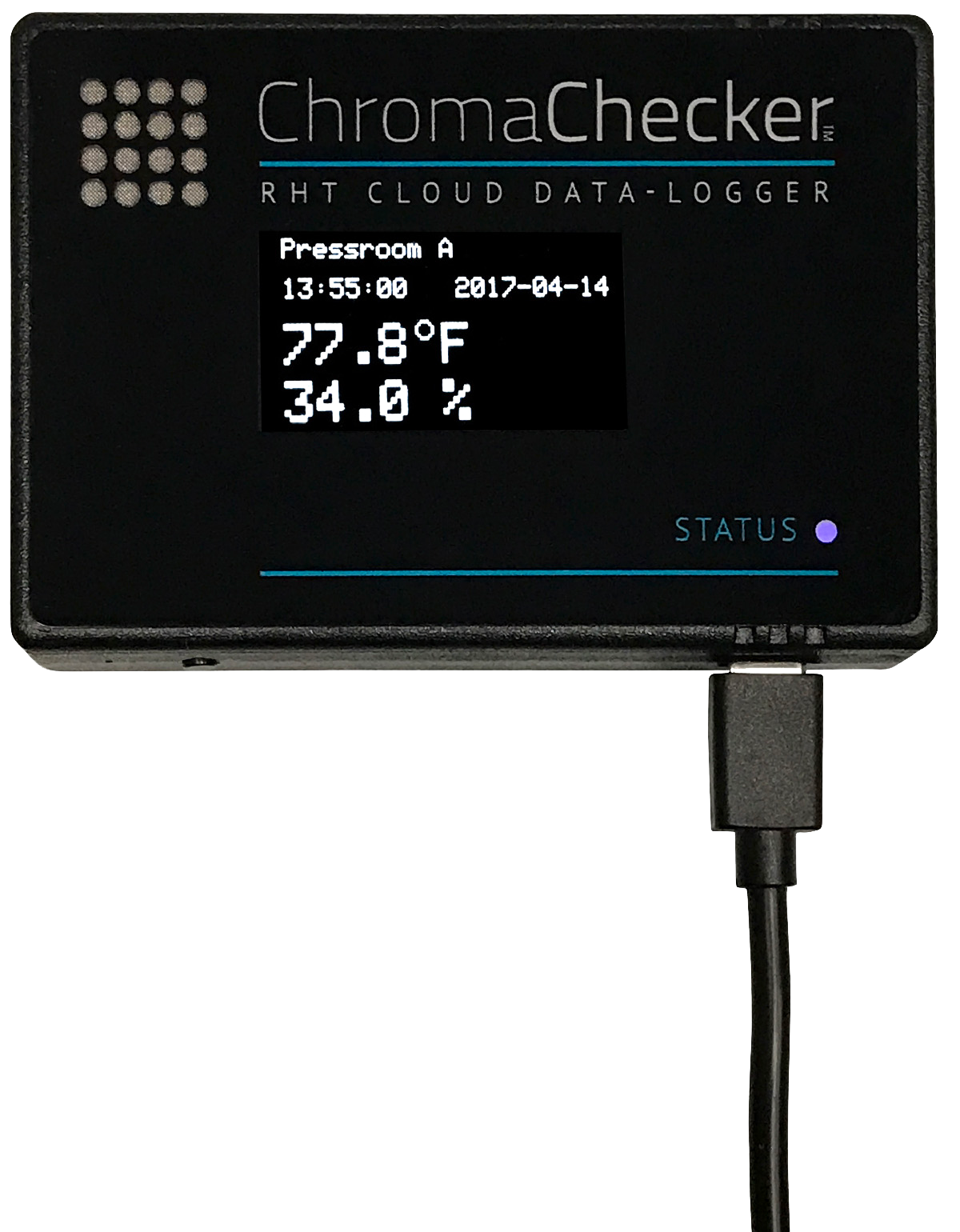
- If there are problems with the registration, perform the CARE (Computer Assisted Register Evaluation).
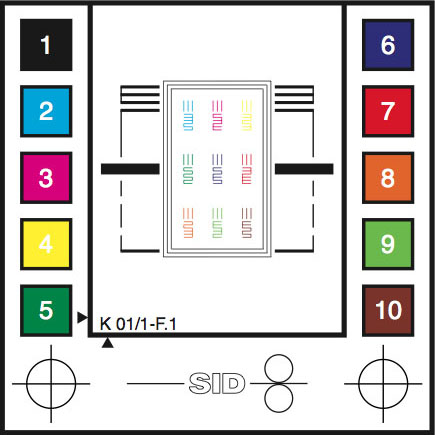
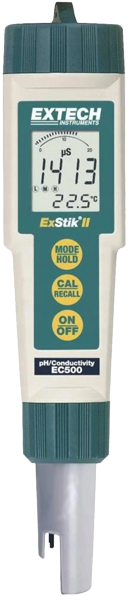
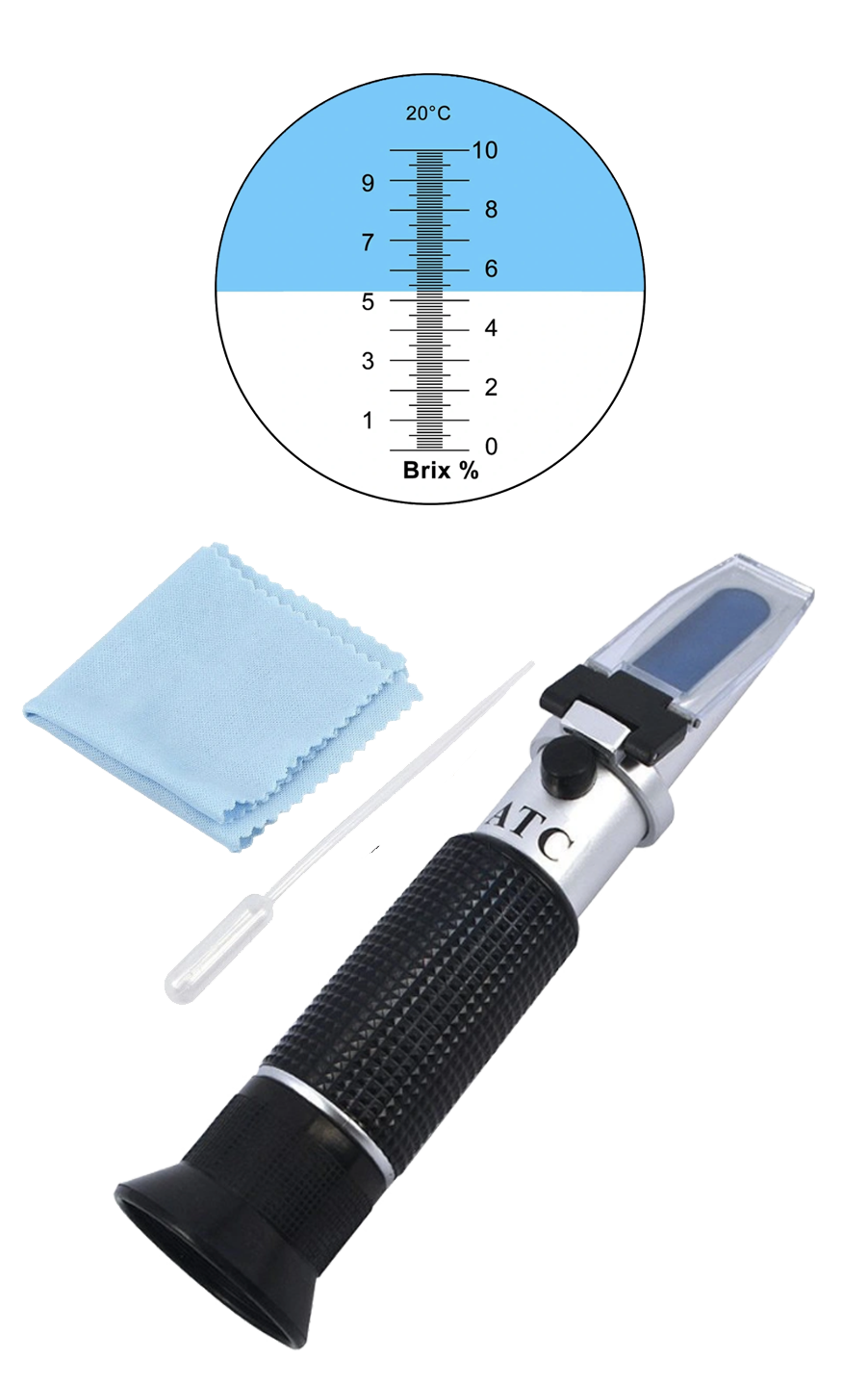
To learn more, follow the detailed instruction. - Control Fountain Solution — we recommend using ChromaChecker Fountain Inspector for documentation purposes. Measure and record basic parameters:
 |
 |
|
| Extech EC500 Multitester TDS, Conductivity, pH, Salinity, Temperature | Refractometer 0-10% with Automatic Temperature Compensation |
Related Topics
Contact ChromaChecker Support
Additional information and Support Form is available for logged users.